
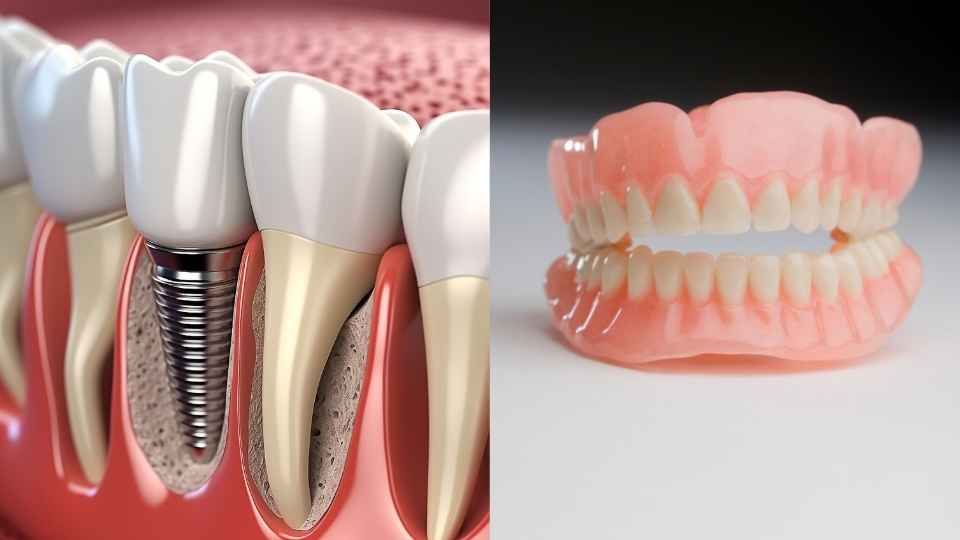
If you’re missing one or more teeth, dental implants and dentures are two common options for restoring your smile. While both can replace missing teeth, they work differently and may suit different dental situations.
Understanding the differences between dental implants vs dentures can help you have a more informed conversation with your dentist and determine which option may be suitable for your needs.
What Are Dental Implants?
Dental implants are designed to replace the root of a missing tooth. An implant is placed into the jawbone and, after the area has healed, can support a custom-made crown.
For suitable patients, an implant-supported crown can provide a fixed solution for replacing an individual missing tooth.
At Pinewood Dental Group, you can learn more about implant crowns and how they can be used to restore missing teeth.
What Are Dentures?
Dentures are removable appliances designed to replace missing teeth. Depending on how many teeth need to be replaced, you may require a partial denture or a full denture.
Dentures are custom-made to fit your mouth and can restore your ability to eat, speak and smile comfortably.
Explore our dentures page to learn more about this tooth replacement option.
Dental Implants vs Dentures: What's the Difference?
While both treatments can replace missing teeth, there are several differences to consider.
How They Are Supported
Dental implants are supported by implants placed into the jawbone. The implant acts as an artificial tooth root and can support a crown.
Dentures are removable and rest within the mouth. Depending on the type of denture and your individual circumstances, they may be supported by your gums and remaining teeth.
Are They Fixed or Removable?
One of the main differences between dental implants and dentures is how they are held in place.
Dental implants are designed to be fixed in place once the restoration has been completed.
Dentures are removable, allowing you to take them out for cleaning and as recommended by your dentist.
How Many Teeth Can They Replace?
An implant and crown can replace an individual missing tooth. Multiple implants may also be considered when several teeth are missing.
Dentures can replace several missing teeth or a complete arch, depending on the type required.
What Does Treatment Involve?
Dental implant treatment involves placing the implant into the jawbone, followed by a healing period before the final restoration is attached.
Dentures involve taking measurements or impressions of your mouth so a custom appliance can be made. Adjustments may be required to achieve a comfortable fit.
The treatment process will depend on your individual dental needs.
Dental Implants or Dentures: Which Is Better?
There isn’t one option that is automatically better for everyone.
Dental implants may be considered when a patient wants a fixed tooth replacement and has suitable oral health and bone conditions.
Dentures may be an appropriate option for replacing several missing teeth or a complete arch, particularly when implants aren’t suitable or aren’t the preferred treatment.
Your dentist will assess your individual circumstances before recommending a treatment.
What Factors Should You Consider?
When comparing dental implants vs dentures, your dentist may consider:
- The number of missing teeth
- The location of the missing teeth
- The condition of your remaining teeth
- Your gum health
- The condition of your jawbone
- Your overall oral health
- Your treatment preferences
- Your long-term dental goals
- Your ability to maintain the restoration
This is why a dental assessment is important before choosing a tooth replacement option.
Could a Dental Bridge Be Another Option?
Dental implants and dentures aren’t the only ways to replace missing teeth.
A dental bridge can replace one or more missing teeth using neighbouring teeth for support. Bridges are fixed in place and may be an alternative when an implant isn’t suitable or isn’t preferred.
You can learn more about this option on our crowns and bridges page.
If you’re comparing all three treatments, our guide to dental implants vs bridges vs dentures provides a broader overview.
What Happens If You Don't Replace a Missing Tooth?
Replacing a missing tooth isn’t simply about improving the appearance of your smile.
Depending on where the tooth was lost, surrounding teeth may move into the space over time. Missing teeth can also affect chewing and the way your teeth come together.
If you’re considering whether you need to replace a missing tooth, read our guide to what happens if you don’t replace a missing tooth.
You can also explore our missing teeth treatment page for more information about tooth loss and replacement options.
How Long Do Dental Implants Last?
Dental implants are designed to be a long-term tooth replacement option, but their longevity can depend on factors such as oral hygiene, gum health, lifestyle and ongoing dental care.
The implant and the crown it supports are separate components, and the crown may eventually experience normal wear.
If you’re considering implants, read our guide to how long dental implants last to learn more about caring for your restoration.
Which Option Is Right for You?
Choosing between dental implants and dentures is a personal decision that should be based on your oral health and individual circumstances.
Your dentist can examine your teeth, gums and jawbone and discuss the advantages and considerations of each option.
There may also be situations where a dental bridge or another restorative treatment is more appropriate.
For a complete overview of your options, read our guide to dental implants and tooth replacement.
Discuss Your Tooth Replacement Options
Living with missing teeth can affect your confidence, comfort and everyday oral function. Fortunately, there are several ways to restore your smile.
Pinewood Dental Group can assess your oral health and explain the tooth replacement options that may be suitable for you.
Considering dental implants or dentures to replace missing teeth? Contact Pinewood Dental Group to arrange a consultation and discuss your options with our dental team. We proudly provide personalised dental care for patients in Mount Waverley and surrounding suburbs.
