
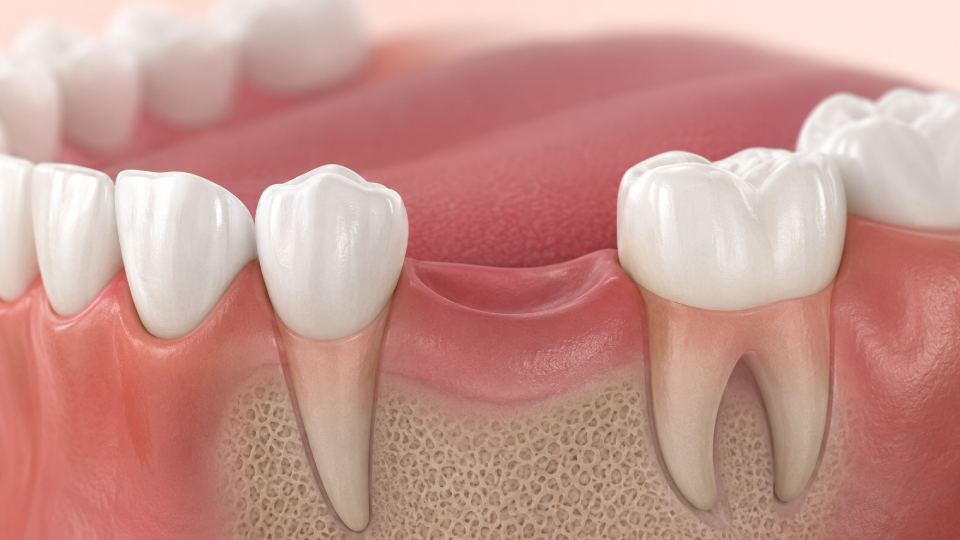
Losing a tooth can affect more than the appearance of your smile. Even if a missing tooth isn’t causing pain, leaving the gap untreated may affect your bite, chewing ability and surrounding teeth over time.
If you’ve lost one or more teeth, understanding the potential effects of tooth loss can help you make an informed decision about whether replacement may be appropriate.
What Happens When You Lose a Tooth?
A missing tooth leaves an empty space in your mouth. The effects of this gap can vary depending on which tooth is missing, how long it has been missing and the condition of your surrounding teeth and gums.
Some people may experience changes in chewing or speech, while others may notice their neighbouring teeth gradually moving into the space.
This doesn’t mean every missing tooth must automatically be replaced. Your dentist can assess your individual circumstances and explain your options.
Can Other Teeth Move After Tooth Loss?
Yes, surrounding teeth can shift into the space left by a missing tooth.
This movement can affect the way your upper and lower teeth meet when you bite. It may also make certain areas more difficult to clean, potentially increasing the risk of plaque build-up and other oral health problems.
Regular dental examinations can help your dentist monitor changes in your teeth and bite.
Can a Missing Tooth Affect Chewing?
Your teeth work together to bite and chew food. Losing one or more teeth can make it more difficult to chew comfortably, particularly when the missing tooth is in an area that experiences significant biting pressure.
Depending on the number and location of missing teeth, replacing them may help restore chewing function.
Can Tooth Loss Affect Your Jawbone?
The jawbone surrounding a natural tooth receives stimulation when you bite and chew. Following tooth loss, the bone in the area can gradually change.
If you’re considering dental implants, your dentist can assess the area and determine whether an implant may be suitable based on your oral health and individual circumstances.
Learn more about implant crowns as one option for restoring a missing tooth.
Dentures
Dentures are removable appliances that can replace several missing teeth or a complete arch.
Learn more about your options on our dentures page.
Which Tooth Replacement Option Is Right for You?
The most suitable treatment depends on your individual circumstances.
Your dentist may consider:
- The number of missing teeth
- The location of the gap
- The condition of your remaining teeth
- Your gum health
- Your jawbone
- Your overall oral health
- Your preferences and treatment goals
Dental implants, bridges and dentures all have different advantages and considerations.
If you’re comparing these treatments, our guide to dental implants vs bridges vs dentures explains how they differ.
You can also read our comparison of dental implants vs dentures if you’re deciding between these two options.
What Should You Do If You Have a Missing Tooth?
If you’ve recently lost a tooth or have had a gap for some time, it’s worth discussing it with your dentist.
An examination can help identify any changes to the surrounding teeth, gums or bite and determine whether tooth replacement should be considered.
You don’t necessarily need to decide on treatment immediately. Your dentist can explain your options and help you understand what may be appropriate for your circumstances.
Restore Your Smile at Pinewood Dental Group
Replacing a missing tooth may help restore chewing function, maintain your bite and improve the appearance of your smile.
At Pinewood Dental Group, we provide personalised restorative dental care and can discuss options such as dental implants, bridges and dentures based on your individual needs.
Have you been living with a missing tooth and aren’t sure whether you should replace it? Contact Pinewood Dental Group to discuss your options with our dental team. We proudly provide personalised dental care for patients in Mount Waverley and surrounding suburbs.